
CANOPY · EV Canopy Technology
Finding hornet nests before they find our bees.
We are developing AI multi-sensor cameras that verify yellow-legged hornet sightings, track hornets back to the nest and spot nests high in the tree canopy, so response teams can cover more ground with fewer specialists.
Work with usThe problem
An invasive predator that is outgrowing the people who hunt it.
The yellow-legged hornet (Vespa velutina, also called the Asian hornet) eats honey bees and wild pollinators. It threatens beekeepers and the pollination that orchards, soft fruit and field crops depend on.
Today, nests are found by highly skilled inspectors and volunteers: trapping hornets, tagging them and following them on foot. It works, but it depends on a small pool of people, and most nests are built high in trees where they are hard to see.
Jersey shows what happens next. Its government now says the hornet cannot realistically be eradicated and the focus has to shift to managing the risk.
What we're building
One camera system, four jobs.
CANOPY combines hyperspectral and multispectral imaging, thermal, and UV fluorescence with AI models trained on real field data.
01
Verify sightings
Tell yellow-legged hornets apart from native hornets, wasps and look-alikes, so teams only chase the real ones.
02
Track to the nest
Turn hornet flight lines seen by two or more cameras into a small search area, without trapping and tagging.
03
Find nests in the canopy
Pick out nest material against leaves, looking up from below the trees and down from above.
04
Monitor treated sites
Keep watch after a nest is destroyed and flag any return of activity.
Not just hornets. The same cameras record other invasive species and woodland threats, including oak processionary moth, bark beetles, grey squirrels and invasive plants.
Approach
Two seasons: learn, then test.
2027 season
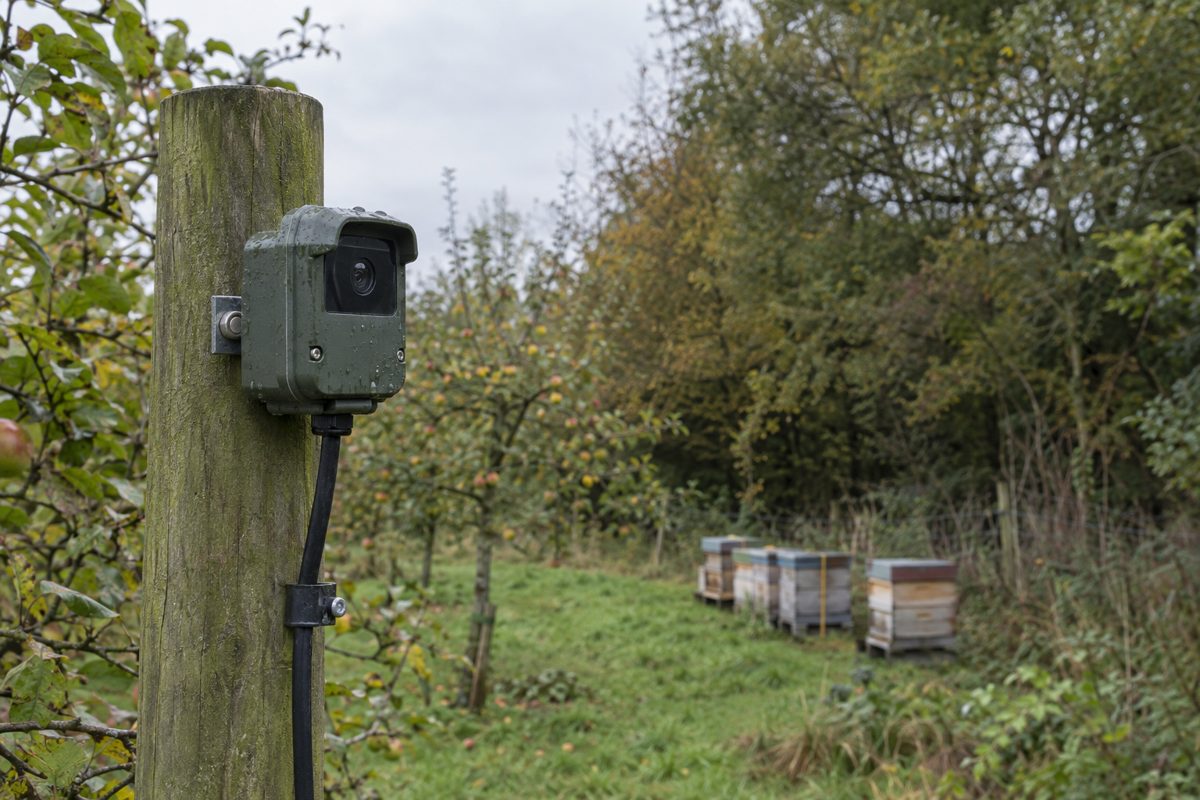
Static cameras and model training
A network of fixed multi-sensor cameras at hornet-active sites gathers data, shows which sensors work best and trains the recognition models. A laboratory study measures how nest material looks in different light.
2028 season
Field units and drone trials
The best sensors and models go into field units and a drone payload, tested in real conditions against current methods on the same sites.
Team
Camera engineering, hornet science and woodland know-how.
Founder
Jonathan Thursby
Founded EV Offshore in 1999 and was its CTO for 25 years, building camera and vision systems for deep-sea and extreme inspection work, with four US patents. Lives on Guernsey.
Co-founder
Mark Curtis
Retired senior finance executive and now passionate beekeeper.
Project partners
Newcastle University and Maydencroft
Hornet and bee biology, trial design and validation from Newcastle University. Woodland access, tree work and invasive-species field operations from Maydencroft.
Get involved
Help us put cameras where the hornets are.
We are looking to hear from:
- Beekeepers and beekeeping associations
- Landowners, farmers, foresters and woodland managers
- Pest-control and arboricultural contractors
- Island and local governments dealing with the hornet